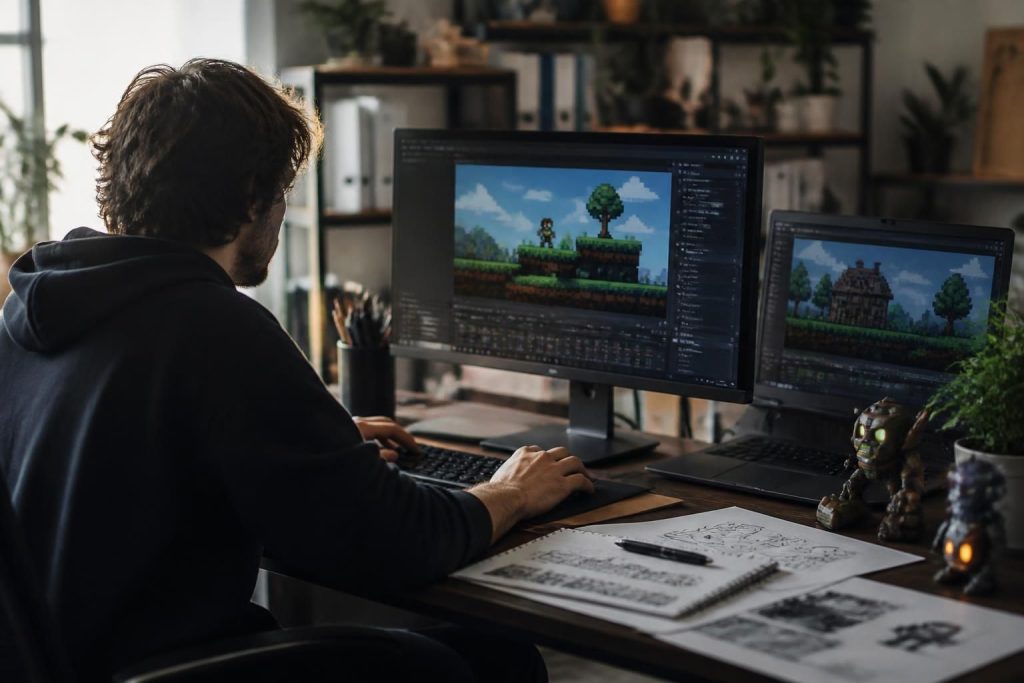
Indie game development has evolved significantly over the decades, transforming from a niche endeavor into a significant force within the gaming industry. Once dominated by large studios with substantial budgets, the landscape now showcases the creativity and innovation of independent developers who harness the power of technology to create unique gaming experiences. This article will explore the historical roots of indie game development, its growth, challenges faced by developers, and its impact on the broader gaming culture.
Historical Foundations of Indie Game Development
The origins of indie game development can be traced back to the early days of computer gaming in the 1970s and 1980s. During this period, a handful of passionate individuals began creating games from their homes, free from the constraints of corporate expectations. Notable early examples include Adventure (1976) by Will Crowther and Colossal Cave Adventure (1977) by Don Woods, which stood as pioneers in text-based gaming and set the stage for what would become a thriving independent scene.
As the gaming industry progressed into the 1990s, many of these early developers began to find niche markets for their games. The advent of shareware and distribution via bulletin board systems (BBS) allowed developers to reach audiences without traditional publishing deals. This democratization of game distribution laid the groundwork for what would become the indie movement, characterized by a focus on innovation and personal expression.
The Rise of Indie Gaming in the 2000s
The early 2000s marked a pivotal moment for independent game developers, largely due to the increasing accessibility of development tools and platforms. Software such as GameMaker, Unity, and Unreal Engine offered affordable or free ways for developers to create games without needing extensive funding or resources. This accessibility led to a surge of indie titles that began to capture the attention of players and critics alike.
One of the most significant events during this era was the release of World of Goo in 2008. Developed by 2D Boy, the game showcased how independent developers could produce commercially viable products that rivaled those made by major studios. Following its success, numerous indie games such as Super Meat Boy and Braid continued to push the boundaries of creativity, introducing innovative gameplay mechanics and storytelling techniques.
Challenges Facing Indie Developers
Despite their burgeoning success, indie game developers face a myriad of challenges. One of the biggest hurdles is financial sustainability. Many indie studios operate on tight budgets, often relying on crowdfunding platforms like Kickstarter to fund their projects. While crowdfunding can provide the necessary capital for development, it also places pressure on developers to deliver a product that meets the expectations of backers.
Moreover, competition in the indie gaming space is fierce. With thousands of new games being released each year across various platforms, standing out in a crowded marketplace is a significant challenge. Developers must leverage marketing strategies and social media to build a community around their games. Engaging with players and receiving feedback during development can enhance a game’s quality and increase its chances of success.
The Impact of Indie Game Development on Gaming Culture
The influence of indie game development extends far beyond individual titles; it has reshaped the gaming culture as a whole. Indie games have introduced diverse narratives and artistic styles that reflect a broader spectrum of human experiences. Titles such as Celeste, which addresses mental health challenges, and Night in the Woods, which explores themes of anxiety and friendship, have resonated with players in profound ways. For more on this topic, see สล็อต.
Furthermore, the indie scene has fostered a sense of community within the gaming industry. Events like the IndieCade and the Independent Games Festival provide platforms for developers to showcase their work and network with peers. These gatherings not only celebrate indie achievements but also encourage collaboration, mentorship, and the sharing of knowledge among up-and-coming developers.
Today, players can access a wide range of indie titles through various distribution platforms such as Steam, itch.io, and the Epic Games Store, making it easier than ever to discover new experiences. The growth of these platforms has also made it possible for developers to retain greater control over their distribution and revenue, empowering them to create art on their own terms.
The Future of Indie Game Development
Looking ahead, the future of indie game development appears promising, fueled by ongoing advancements in technology and evolving player preferences. As platforms become more accessible and development tools continue to improve, aspiring developers are likely to emerge from all corners of the globe. Innovations such as virtual reality (VR) and augmented reality (AR) are also presenting exciting opportunities for indie creators to pioneer fresh gameplay experiences.
Moreover, the increasing diversity of voices in the indie scene is likely to shape the types of games that emerge in the coming years. From personal stories to politically charged narratives, indie developers are harnessing their unique perspectives to challenge the status quo and offer alternatives to mainstream gaming trends.
As indie game development continues to evolve, it will undoubtedly leave a lasting impact on the broader gaming landscape. The successes and innovations stemming from independent studios will inspire future generations of developers and players alike, ensuring a vibrant and diverse gaming culture for years to come.
In conclusion, indie game development has come a long way from its humble beginnings, evolving into a key component of the gaming ecosystem. While challenges remain, the resilience and creativity of independent developers continue to push the boundaries of what gaming can achieve, enriching both the industry and the culture surrounding it. As technology advances and new voices enter the field, indie development will likely continue to thrive, offering players unique and compelling experiences that reflect the vast diversity of the human experience.